Wednesday, January 31, 2007

Hot Cocoa!!!


Drinking a cup of hot cocoa aily helps skin stay young and healthy! According to German researchers, hot cocoa contains the elements needed for healthy skin. They found during research that women who drunk hot cocoa for three consecutive months developed smooth and hydrated skin.
Dr. Wilhelm Stahl, a researcher at Heinrich Heine University in Dusseldorf says
'cocoa contains high level of antioxidants, flavonols. It does help skin to stay healthy and smooth.'

Exciting and delicious news!

Tuesday, January 30, 2007

myths about acne

There are many myths about what causes acne. Chocolate and greasy foods are often blamed, but there is little evidence that foods have much effect on the development and course of acne in most people. Another common myth is that dirty skin causes acne; however, blackheads and other acne lesions are not caused by dirt. Stress doesn't cause acne, but research suggests that for people who have acne, stress can make it worse. Here are some more common myths about acne, even I was surprised when I read one of them (no. 1, in case you were wondering!):

Myth #1: Tanning clears up skin.
Fact: Although a tan may temporarily mask acne, the sun can make the skin dry and irritated, leading to more breakouts in the future. In fact, there's no link between sun exposure and acne prevention, but the sun's rays can cause premature aging and skin cancer. Always protect your skin by choosing a sunscreen of at least SPF (sun protection factor) 15 that says noncomedogenic or nonacnegenic on the label, which means it won't clog pores.

Myth #2: Chocolate and greasy foods cause acne.
Fact: Although eating too many sugary, high-fat foods is never a good idea, studies show that no specific food has been proven to cause acne. Every individual is different, though. Some people notice their breakouts are worse after eating certain foods — and these foods are different depending on the person. For example, some people may notice breakouts after eating chocolate, while others are fine with chocolate but notice they get breakouts after drinking too much coffee. If that's the case for you, it can help to cut back on that food and see if it makes a difference.

Myth #3: The more you wash your face, the fewer breakouts you'll have.
Fact: Although washing your face helps to remove dirt and oil from your pores, washing too much can lead to dryness and irritation, causing more breakouts. Also, avoid scrubbing your face, which can irritate the skin. As a general rule, wash your face twice a day with mild soap and water in a circular motion and gently pat dry when you're done.
Myth #4: Popping pimples will help them go away faster.
Fact: Popping a pimple may make it seem less noticeable temporarily, but popping can cause it to stay around longer. By squeezing pimples and zits, you can actually push bacteria further into the skin, causing more swelling and redness — and sometimes causing a red or brown mark or scar to form. Sometimes marks can last for many months and true scars (dents and pits) will last forever.

Myth #5: Don't wear makeup if you want clear skin.
Fact: As long as you choose cosmetics that are nonacnegenic or noncomedogenic, they shouldn't cause breakouts. In fact, some concealers now contain benzoyl peroxide or salicylic acid, which help to fight acne. You can also try tinted benzoyl peroxide creams that hide pimples while helping treat them.
If you've had moderate to severe acne, though, talk to your doctor or dermatologist about the best cosmetics to use — he or she may recommend avoiding cosmetics altogether or only using certain brands so you're acne isn't aggravated.
And even if a product is labeled nonacnegenic or noncomedogenic, you should stop using it and talk to your doctor if you notice that it's irritating your skin or seems to cause breakouts.

Myth #6: If you keep getting breakouts, it helps to use more acne medication until the breakouts stop.
Fact: Because acne medication contains drying agents like benzoyl peroxide and salicylic acid, using too much medication may cause overdrying, leading to irritation and more blemishes.
If over-the-counter acne medication doesn't seem to work on your acne, it's a good idea to talk to your doctor or dermatologist. Also, if you're taking a prescription acne medication, make sure you follow your doctor's instructions — some medications may take up to 8 weeks to make a significant difference.

Thursday, January 25, 2007

Skin Diseases in the World


Skin diseases are common in the whole world. In the countries in the process of development, the infectious diseases such as tuberculosis, leprosy and the onchocercose are common, while in the developed countries, inflammatory disorders such as eczema and the acne are common. Disorders of skin can be inherited, for example the syndrome of Ehlers-Danlos, a part of normal development, for example vulgaris of acne, or can present as an element of a systemic disorder, for example the systemic erythematosus of lupus (SLE).

Approximately 25% of the UK population will develop a skin problem and, although self-medication is common, skin disease still accounts for 10% of the workload of family doctors. The common reasons for this are itching or pain, which can interfere with people's ability to function normally or to sleep; rashes which cause anxiety, depression and lack of self-confidence and can lead to social isolation if obviously visible; and an inability to work, because certain dermatoses (such as allergic hand eczema in a builder or hairdresser) can interfere with or even prevent working.

Rarely skin disease can be fatal. Examples are malignant melanoma, toxic epidermal necrolysis and pemphigus.

Wednesday, January 24, 2007

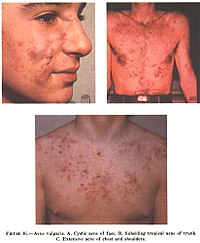
Acne


What causes acne ?
The exact cause is unknown. One theory is that when hormone levels increase during puberty, the skin of the acne- prone person reacts by producing excess sebum (oils). The bacteria on the skin alter these oils to produce substances that cause acne. The hair follicle, the site of acne may get plugged with dead skin cells. Sebum and bacteria may accumulate and cause pimples.

What are the types of acne ?
These include blackheads, whiteheads (comedones), the larger papules (pimples) and later, pustules and large cysts. Scars occur after papules, pustules and cysts. They are permanent.

What should I do when I have acne ?
Consult your doctor early. Waiting to 'outgrow ) acne can be a serious mistake, since medical treatment can improve your appearance and prevent the development of scars.
Your doctor will prescribe treatment depending on the type and severity of the acne. Follow the doctor's instructions.
Some antibiotics (tetracycline or erythromycin), which are effective for acne need to be taken on an 'empty stomach, to improve absorption. Some lotions or creams may make the skin red or flaky but usually this effect is temporary . Go back to see your doctor if the lotions or creams cause excessive redness and itchiness. Do not squeeze or scratch pimples. Do not attempt to cover pimples on the forehead with a fringe.


What are topical acne medications ?
They consist of peeling agents (sulphur), topical antibiotics (erythromycin, clindamycin, benzoyl peroxides) and topical vitamin A, (Airol, Eudyna, Retin A or Stieva A). Can 'diet' cause acne ?
There is no concrete evidence that food causes acne. Following the strictest diet will not by itself clear your acne.
On the other hand, a few people find that their acne seem to worsen when they eat certain foods, particularly chocolates, fried food and chillies. These people should avoid the foods that clearly aggravate their acne.

Tuesday, January 23, 2007

Skin Diseases Photos


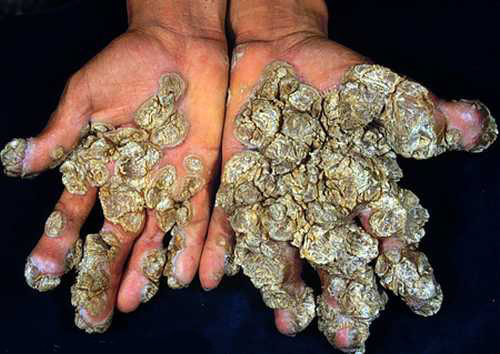
These photos are to show people some of the results of the skin diseases I have written about in this blog.


Monday, January 22, 2007

factors that cause skin cancer

Fair complexion: Having light skin, skin that freckles or burns easily and blue eyes increases your risk of skin cancer.
Moles: Irregularly shaped or colored moles and having lots of moles may increase your risk of melanoma.

Chemical exposure: Exposure to arsenic, a heavy metal used in making some insecticides, and found in some water supply, increases the risk of developing non-melanoma skin cancer. Occupational exposure to industrial tar, coal, paraffin and certain types of oil also may increase the non-melanoma skin cancer risk.

Radiation exposure: Radiation therapy may increase the risk of a non-melanoma skin cancer.
Long-term or severe skin inflammation or injury: In rare cases, non-melanoma skin cancers grow in scars from severe burns, on areas of skin over severe bone infections, and on skin damaged by certain severe inflammatory skin diseases.
Psoriasis treatment: Patients treated with the drug psoralen and ultraviolet light (PUVA) may have an elevated risk of squamous cell carcinoma.

Actinic keratosis: These thick scaly patches of skin can sometimes develop into cancer.
Xeroderma pigmentosum: This very rare hereditary disease makes it difficult for the skin to repair DNA damage from UV light. Xeroderma pigmentosum patients typically suffer many skin cancers, which may begin in childhood.

Basal cell nevus syndrome: People born with this rare condition develop multiple basal cell carcinomas and other health problems.
Reduced immunity: People whose immune system is diminished because of HIV infection, drugs that prevent rejection of donor organs or chemotherapy are at increased risk for non-melanoma skin cancer. New immune drugs used to treat skin disease may affect the body's immune system and increase the risk of cancer, especially lymphomas.

Friday, January 19, 2007

makeup and severe acne questions


Can I use cosmetics when I have acne ?
Avoid oily and greasy cosmetics. Use water-based, oil-free cosmetics sparingly. You can use eyeliners, eyeshadows and lipsticks.

What if I have severe cystic acne ?
Do not despair. A new oral drug, isotretinoin, is available for the treatment of severe cystic acne. This medication can cause side effects and should be taken under the supervision of a dermatologist.

Thursday, January 18, 2007

Kinds of skin diseases

Acne Acne is the most common skin disease treated by physicians. It is a chronic condition that affects over 85% of adolescents and young adults. There are different types of acne that respond to different types of treatment.

Seborrheic Keratosis Seborrheic keratoses are benign lesions that don't necessarily look benign. They can have various colors, grow quickly, itch, and sometimes bleed. Fortunately, they are fairly easy to distinguish from skin cancers.

Dermatitis The term dermatitis describes many classifications of rashes.
The most common dermatitis is atopic dermatitis or eczema.

Herpes Oral and genital herpes are caused by the herpes simplex virus. An infection with this virus is life-long, however the rash can be controlled with medication. Herpes infections in pregnant women can cause serious infections for the baby.

Wednesday, January 17, 2007

Symptoms of chicken pock

The first symptom of shingles is often over-sensitivity or burning sensation on the skin in the affected area. After a few days, a rash develops. It usually appears as a band, following the route of a nerve under the skin.
At first, the rash consists of small red spots and reddened skin in the same area. The spots then turn into small blisters, which dry up after a few days, and gradually form scabs. Once the scabs have fallen off, a small pock-mark may be left.
Shingles is often a painful condition. As the virus affects the nerves, the pain may continue after the rash has cleared, sometimes lingering for weeks, months or even years. This is called post-herpetic neuralgia. It is more likely in older people and in people who had a severe rash.

Monday, January 15, 2007

causes of Cancer of melanocytes

(1)light complexion / freckler;
(2) sun exposure (that long-ago bad sunburn as a kid or teen is the greatest risk);
(3) dysplastic nevus syndrome
(4) total number of benign pigmented nevi >2 mm diameter (5-10 mm, etc., rules vary; xeroderma pigmentosum, etc.;
(5) having ever had a really bad (blistering) sunburn.
(6) a few other familial syndromes

Friday, January 12, 2007

urticaria

Urticaria or hives is a relatively common form of allergic reaction that causes raised red skin welts. Urticaria is also known as nettle rash or uredo. These welts can be 5 mm (0.2 inches) in diameter or more, itch severely, and often have a pale border. Urticaria is generally caused by direct contact with an allergenic substance, or an immune response to food or some other allergen. Hives can be caused by stress.

Thursday, January 11, 2007

by: confused

I'm kinda cOnfused! I read this: There is no concrete evidence that food causes acne. Following the strictest diet will not by itself clear your acne. On the other hand, a few people find that their acne seem to worsen when they eat certain foods, particularly chocolates, fried food and chillies. These people should avoid the foods that clearly aggravate their acne.
So, if there is no evidence that food causes acne, then it's saying that it makes no sense to avoid these foods, because it's my imagination that chocolate gives me pimples, yet it says that I should avoid eating these goods> Is it just me or does that sound a little contradictory?

Wednesday, January 10, 2007

useful info for tinea versicolor sufferers

This is really useful information for anyone who has tinea versicolor...

Treatments for tinea versicolor include:
Topical antifungal medications - containing either 2.5% selenium sulfide (Selsun shampoo in UK, but not Selsun Blue which contains only 1%) or 2% ketoconazole (Nizoral ointment and shampoo) applied to dry skin and washed off after 10 minutes, repeated daily for 2 weeks. Other topical antifungal agents such as clotrimazole, miconazole or terbinafine are less widely recommended. Additionally, Hydrogen Peroxide has been known to lessen symptoms, and on certain occasions, remove the problem.
Oral antifungal
prescription only medications include 400 mg of ketoconazole or fluconazole in a single dose, or ketoconazole 200 mg daily for 7 days, or itraconazole 400 mg daily for 3-7 days.
Recurrence is common and may be reduced by intermittent application of topical agents or adding a little anti-dandruff shampoo to the bath water.

Tuesday, January 9, 2007

ways tO avOid acne

Ways to avoid acne #1: Use a cleansing diet to get rid of the impurities in your system.
Ways to avoid acne #2: Clean your skin everyday.
Ways to avoid acne #3: Use a benzoyl peroxide lotion to keep blemishes at bay.
Ways to avoid acne #4: Check your cosmetics, foods and other products to make sure you are not having a problem with allergies that can be mistaken for acne.
Ways to avoid acne #5: If you eat a high-fiber, low-fat diet you are less likely to have problems with acne.
Ways to avoid acne #6: Some vitamins will decrease your chances of acne. Check with your doctor to see what she suggests.
Ways to avoid acne #7: Drink six to eight glasses of water a day. Water is important for the health of your skin.
Ways to avoid acne #8: Some people feel that cutting down on sugar, flour and caffeine is one of the ways to avoid acne.
Ways to avoid acne #9: If you have small blackheads or pimples do not pop them. This can lead to even more skin problems.
Ways to avoid acne #10: Don’t use greasy lotions and cosmetics as they contain oils that can promote acne.
Ways to avoid acne #11: Try not to take any medications that contain iodides or bromides

Monday, January 8, 2007

Acne and the Psyche

Acne can be associated with psychological factors! That's kind of schocking. This article I read mentioned a study cOnducted by a couple of italian investigators who studied the relationship between skin diseases and the psyche. Many types of skin disturbances (acne, dermatitis, urticaria, psoriasis, etc.) have been associated with psychosomatic factors and this is what led to the investigation being conducted. The findings highlight the high frequency of psychosocial problems in patients with skin disease.

Thursday, January 4, 2007

no need for special soaps

There are so many women out there that are obsessed with facial cleansers and who make such a big deal when >I tell them that there is nothing wrong with washing your face with soap> >I mean, it's true, there really is nothing wrong with using water and soap to wash your face, as long as the soap isn't too harsh> >There really is no need for special soaps>

Wednesday, January 3, 2007

tell your doctor early

I thOught that there was nothing wrOng with OutgrOwing acne> I actually thOught that was best than putting medicatiOns On yOur skin at such a yOung age, but I recently read that its better tO let a dOctor knOw early and be treated early>The article actually said that OutgrOwing acne can be a serious mistake because treatments imprOve appearance and help prevent the develOpment Of scars>

Tuesday, January 2, 2007

Epidermolysis Bullosa

wow, scariest thing I've learned so far...Epidermolysis Bullosa.
EB is a group of blistering skin conditions. The skin is so fragile in people with EB that even minor rubbing may cause blistering. At times, the person with EB may not be aware of rubbing or injuring the skin even though blisters develop. In severe EB, blisters are not confined to the outer skin. They may develop inside the body, in such places as the linings of the mouth, esophagus, stomach, intestines, upper airway, bladder, and the genitals.
It is estimated that 2 to 4 out of every 100,000 people, or up to 12,000 people in the United States, have some form of EB. It occurs in all racial and ethnic groups and affects males and females equally.